
Analysis and evidence review
The system extracts dimensions, materials, tolerances, notes and technical requirements. It flags uncertainty and routes it to an expert for approval.
Inttwin Drawing Intelligence
Inttwin Drawing Intelligence is advanced expert analysis of drawings and automated preparation of input data for downstream processes such as costing or production orders. It accepts PDFs, raster and CAD inputs, combines OCR, geometry processing and multi-pass Vision analysis, and preserves evidence for every material data point.
The system extracts dimensions, materials, tolerances, notes and technical requirements. It flags uncertainty and routes it to an expert for approval.
Approved technical data becomes costing, a quote and a production handoff without repeated manual entry.
The interface screenshots on this page are real, on a sample drawing and on a public NIST drawing. The case study below shows only summary results, without the customer's drawings or data. Customers' real drawings, prices and production know-how are never part of this website.
Example
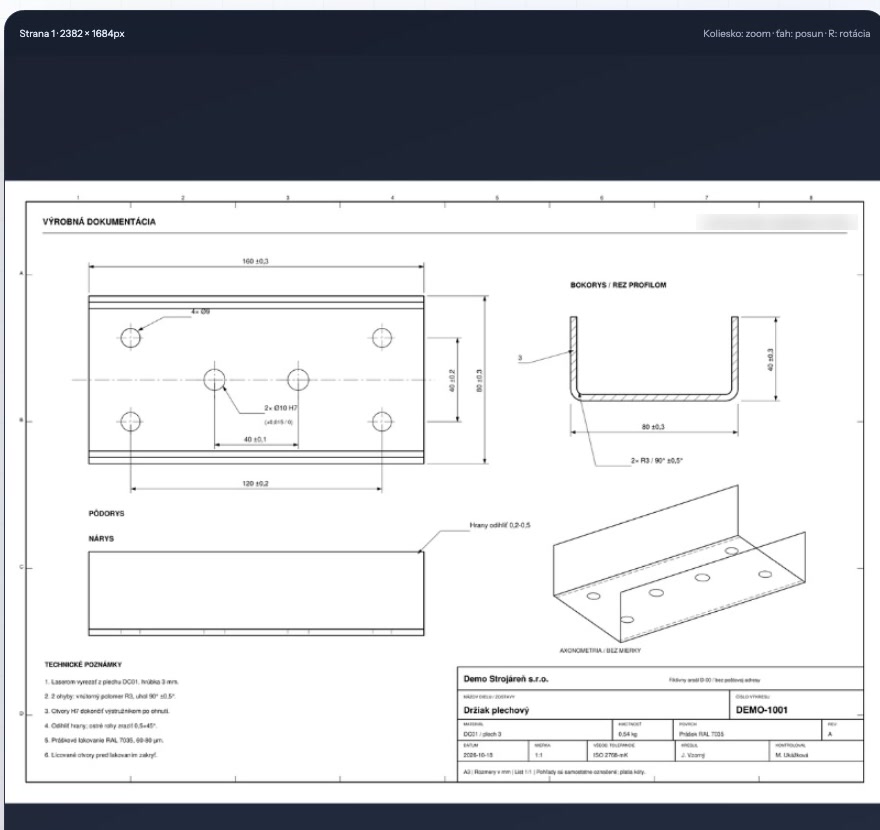
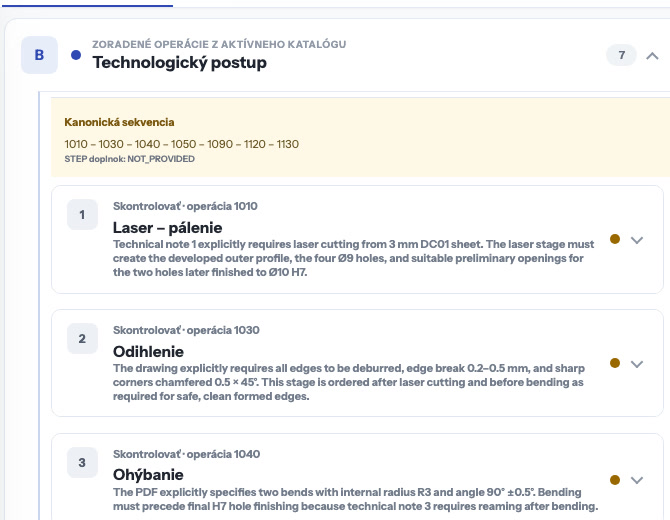
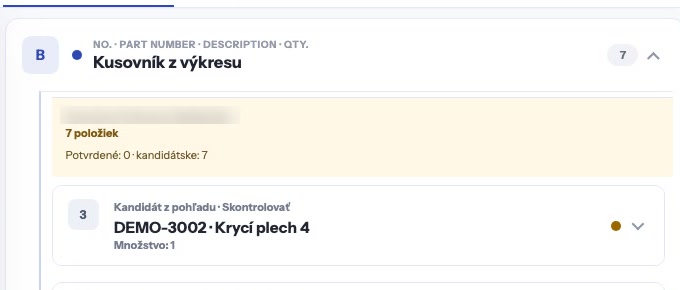
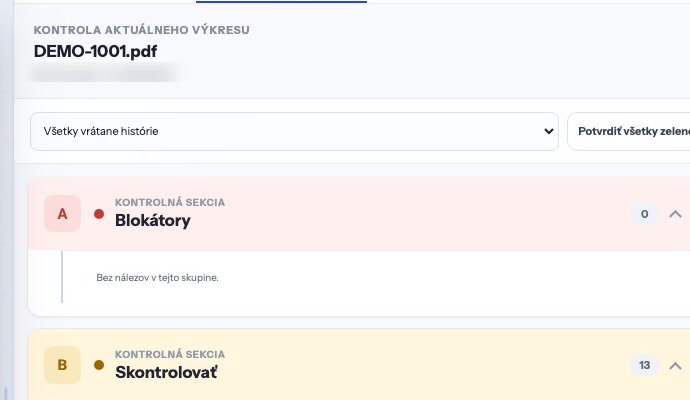
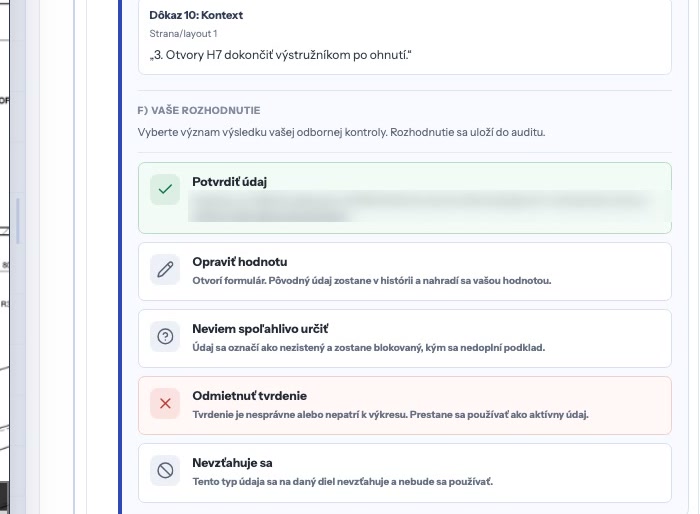
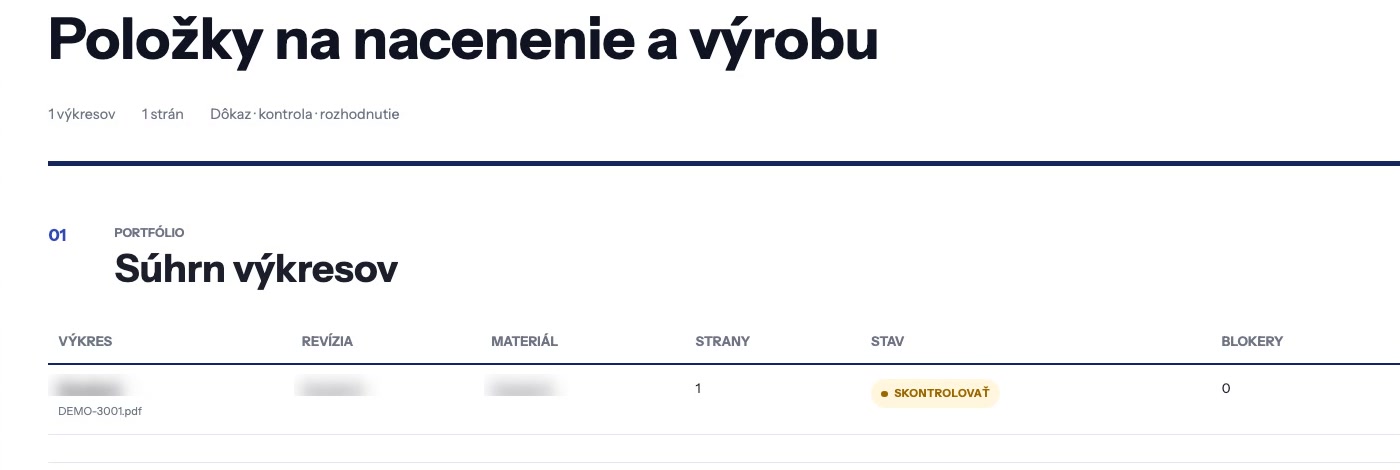
Real interface on a sample drawing. Sensitive areas are blurred where the screenshot contains them.
Public drawing
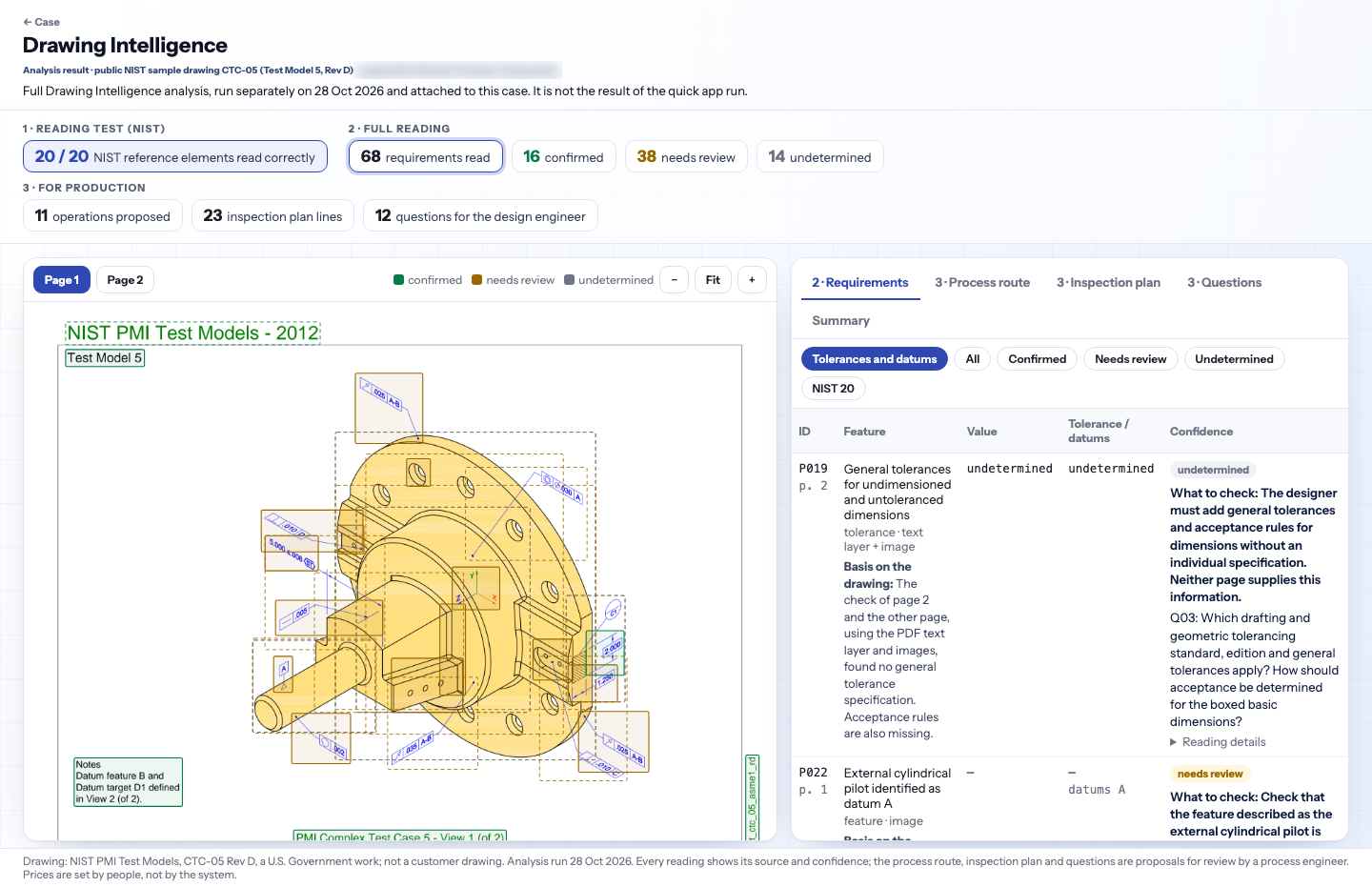
The real Drawing Intelligence interface with the result of a full analysis of the public NIST PMI Test Models CTC-05 Rev D drawing. The drawing is a U.S. Government work, not a customer drawing. Every reading shows its source and confidence; the process route, inspection plan and questions are proposals for review by a process engineer. Prices are set by people, not by the system.
A Slovak manufacturer of metal parts and assemblies sent us 10 of its production drawings (PDF, some with a 3D STEP model) and, for each one, a task its process engineer handles today. The system did not receive the correct answers during processing. We then compared its results with the answers of the company's process engineer.
8 of 10 tasks matched the engineer's answer – 5 exactly and 3 numeric ones to the precision the engineer gave. In the bill of materials all 44 values matched, and the system added one unconfirmed row for review. In the welded assembly 6 of 8 operations matched, and the system itself listed the other two as questions. The test took place in August 2026; in October 2026 we compared its stored outputs with the engineer's answers once more, value by value.
We run the pilot on one typical task, in construction as well as manufacturing. In construction we use the drawings of a completed project and compare the result with your own bill of quantities. Every value has a source in the drawing. Whatever the drawing does not support stays undetermined with a question, and we do not estimate. A person reviews the result, and we run at most two pilots at a time.
Pilot conversation
Please send drawings only after we agree.